Guide to Reading the Quran
Understanding, Learning, and Living With the Quran
“This is the Book about which there is no doubt, a guidance for those conscious of Allah.”
— Surah Al-Baqarah (2:2
What Does It Mean to Read the Quran?
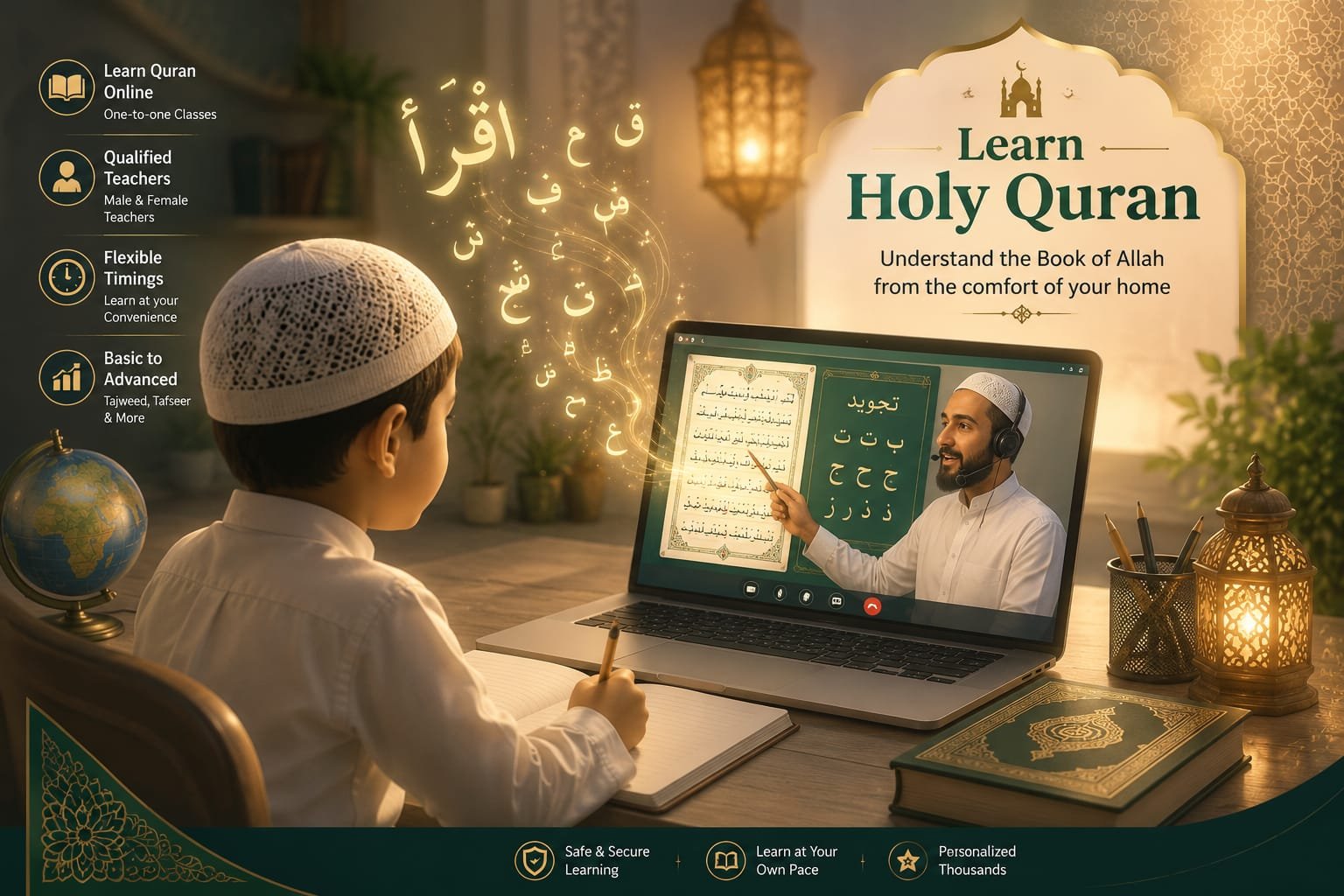
Reading the Quran, often called Nazra in Islamic learning, means reciting the Holy Quran directly from the Mushaf (the written text) with correct pronunciation and increasing fluency. It is the natural next step
after learning the Arabic alphabet through Noorani Qaida, and it forms the foundation for every other stage of Quranic learning — from Tajweed to Hifz. Unlike casual reading, reading the Quran is treated as a sacred act. It is not just about recognizing words on a page; it is about connecting with the literal word of Allah, spoken with care, humility, and presence of heart. For many Muslims, learning to read the Quran fluently is one of the most meaningful milestones in their
religious life opening the door to daily recitation, understanding, memorization, and a lifelong relationship with the Book of Allah.
How Should the Quran Be Read?
Reading the Quran correctly involves more than just pronouncing the words. Islamic tradition teaches several important principles for how the Quran should be approached and recited:
With Purity (Wudu)
It is recommended to be in a state of physical purity (having performed wudu) before touching and reciting the Mushaf, as a sign of respect.
With Correct Pronunciation
RLetters and words should be read as accurately as possible, ideally progressing toward full Tajweed rules
to avoid changing the meaning of the text.
At a Measured Pace
The Quran itself instructs: “And recite the Quran with measured recitation” (73:4) reading slowly and clearly is preferred over rushing through verses.
With Presence of Heart (Khushu)
Reading should not be rushed or mechanical. Reciters are encouraged to reflect on the meaning and recite with humility and focus.
Regularly, Not Occasionally
The Quran is meant to be read consistently even a small portion daily rather than left untouched for long periods.
How the Quran Transforms Our Lives
The Quran is not simply a religious text to be recited it is described in Islamic tradition as a source of guidance, healing, and light for those who engage with it sincerely. Its impact on daily life can be seen in several ways:
A Source of Guidance
The Quran provides direction for every aspect of life worship, character, relationships, and decision-making helping believers navigate life’s challenges with clarity.
Strengthening Faith (Iman)
Regular engagement with the Quran renews and strengthens a person’s connection to their faith, reminding them of their purpose and relationship with Allah.
A Daily Habit of Reflection
Reading even a small portion each day creates a rhythm of reflection, helping believers stay mindful of their beliefs amid the busyness of everyday life.
Inner Peace and Comfort
Many people describe a deep sense of calm and comfort when reciting or listening to the Quran, especially during difficult times. Allah describes it as a source of healing and mercy (17:82).
Shaping Character
The stories, lessons, and commandments within the Quran shape a person’s values encouraging honesty, patience, gratitude, and compassion in daily life.
Connecting Generations
Teaching children to read the Quran passes down not just a skill, but a spiritual identity and tradition that connects families across generations.